For years, people have been customizing their golf carts by adding audio systems, lift kits, custom wheels, custom upholstery, and more. Whether they use them on the golf course, around the farm, in the pits at the racetrack, or to cruise the campground, people want their golf carts to be personalized and fun. Adding an audio system does both, but installing a golf cart audio system has its challenges.
Golf carts don't have sophisticated data systems that require interface modules like most cars and trucks, but they do have a lack of space, acoustical imaging problems, lack of protection from rain and water, and limited electrical current available for additional electronics.
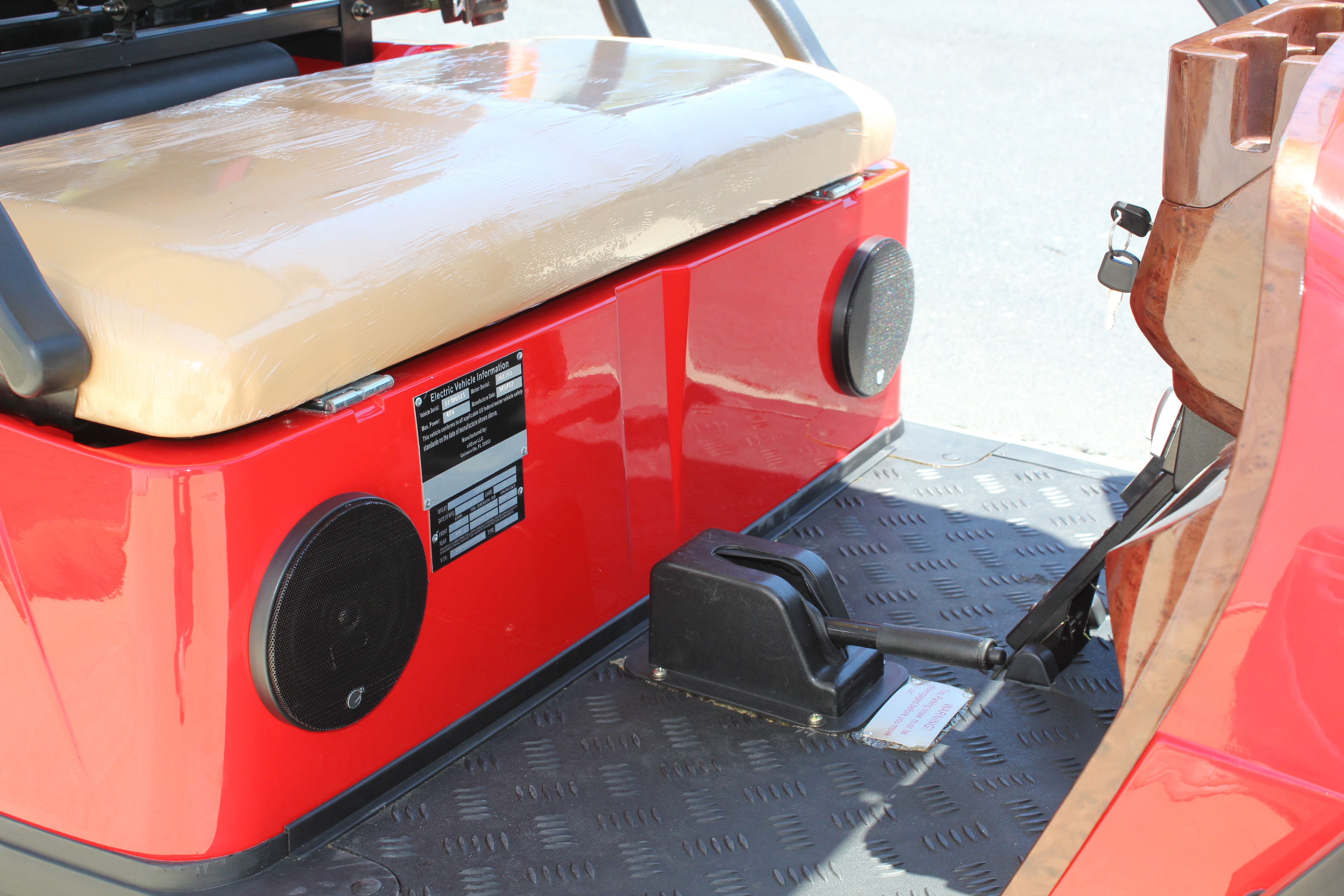
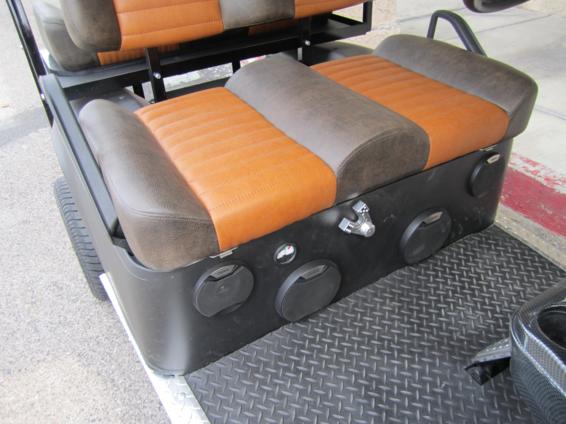
Over the years, we've seen tons of custom golf cart audio installations. Speakers molded into the dash, speakers cut into the fiberglass body, wakeboard tower speakers bolted to the roof, crazy PVC tube systems with speakers in the openings at the end, and even custom built enclosures bolted to the roof.
Most people don't want to cut up their golf cart as that is a fairly permanent customization and requires a certain level of skill that most wives don't appreciate. Creating custom enclosures that fit inside the storage compartments of the dash is also a time consuming and expensive option. Many of the golf cart audio "systems" you find online are not manufactured as a completely finished product. Most are just a bunch of marine audio equipment pieces adapted to fit on a golf cart.
We've seen amplifiers installed under the seat where the motor and battery are. It's a logical place being next to the battery and it is out-of-the-way, but the close proximity to the engine means there is a lot of heat build up that you don't want to expose your amplifier to. Also, the bottom of the engine compartment is open to the ground — this means water, mud, dirt, and other debris can get to the amplifier.
Additionally, amplifiers can put a lot of stress on a golf cart's electrical system, especially electric golf carts. Electric carts might have a 48 or even a 72-volt system, but a lot of that electrical power is being used to drive the cart and gas golf carts typically have very small 12-volt batteries. A system that requires more electrical current than your golf cart can offer will not perform and will require adding an additional battery to the system. An audio system that doesn't pull a ton of current makes the installation much easier. Plus, if the golf cart is electric, it will most likely have a system that is higher than 12 volts so you will either need a separate battery for the audio system or you will need a power converter from 36, 48, 72 volts etc. to 12 volts.
If you want something that will really last and provide good audio, by the time you consider all of these things, a simple golf cart audio system may not be as easy as you thought.
4 Things to Consider
Golf cart audio systems can be completely custom with extra batteries, subwoofers, high power amplifiers, fiberglass enclosures, LED accent lighting, and more, or they can be as simple as a bolt-on, all-in-one system with 3 wires. Having a golf cart with an audio system is much more fun than one without, but having a golf cart audio system that sounds good, can handle the outdoor environments golf carts are used in, and has the electrical efficiency to perform in a standard golf cart are very important factors to consider.
MTX Solutions for Golf Carts
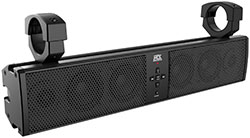
For a simple all-in-one solution, check out the MTX MUD6SPBT — speakers, Bluetooth, and amplification in a sealed, all-weather enclosure that mounts to a roll bar or roof frame with no cutting required.
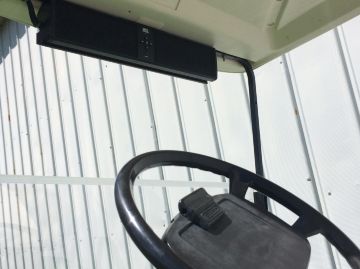
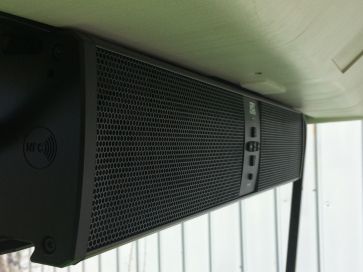
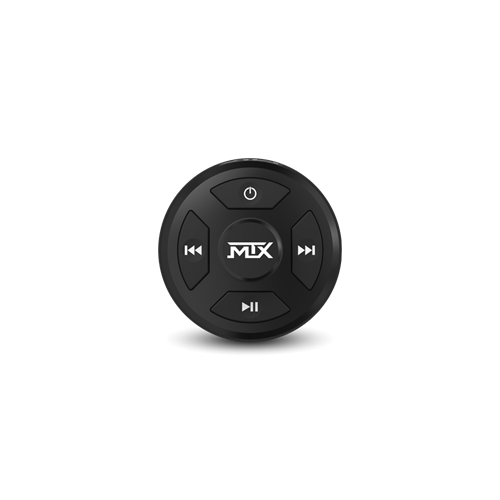
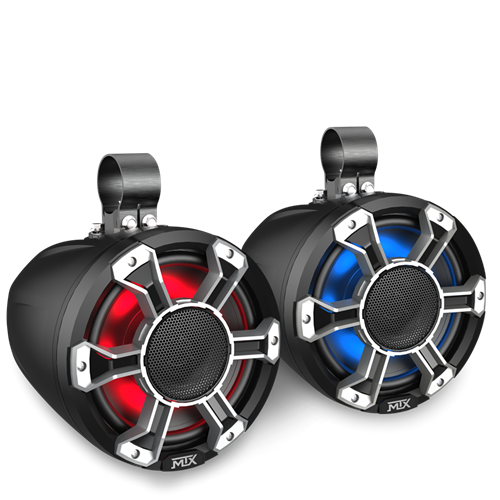
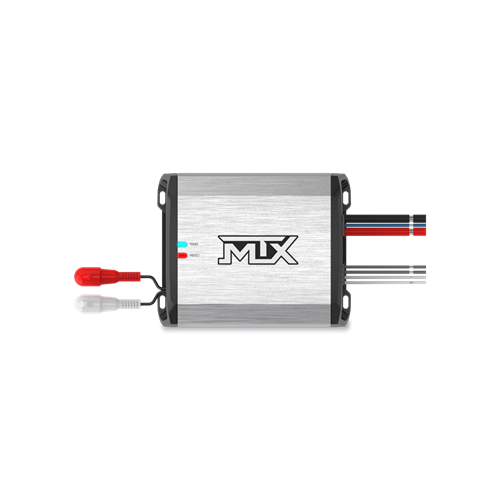
For bigger systems, the MTX UNI-1-BTC and UNI-2-BTC offer external speakers that can be mounted to the golf cart, a high efficiency amplifier, Bluetooth remote control, and everything you need to make it work.