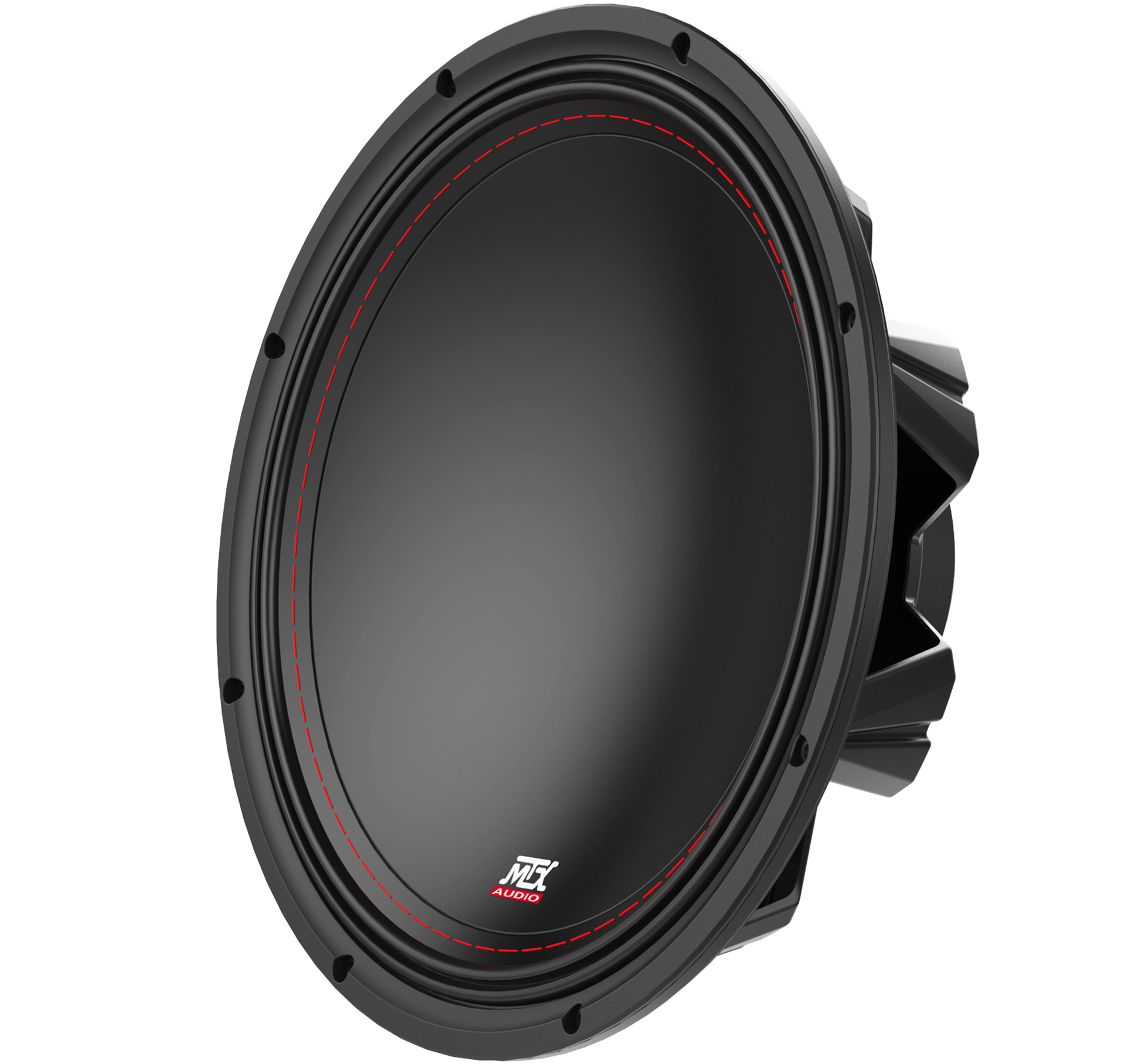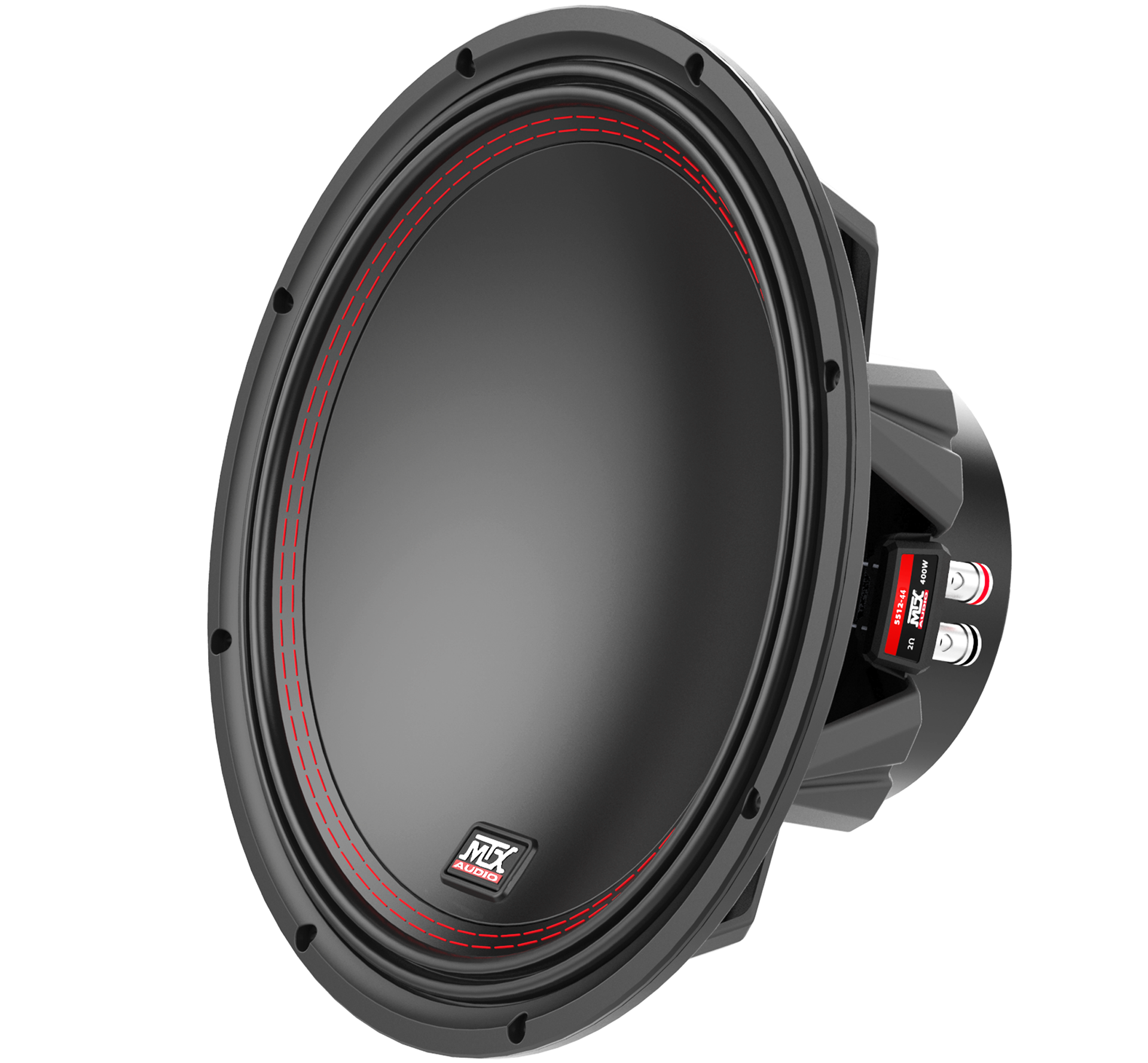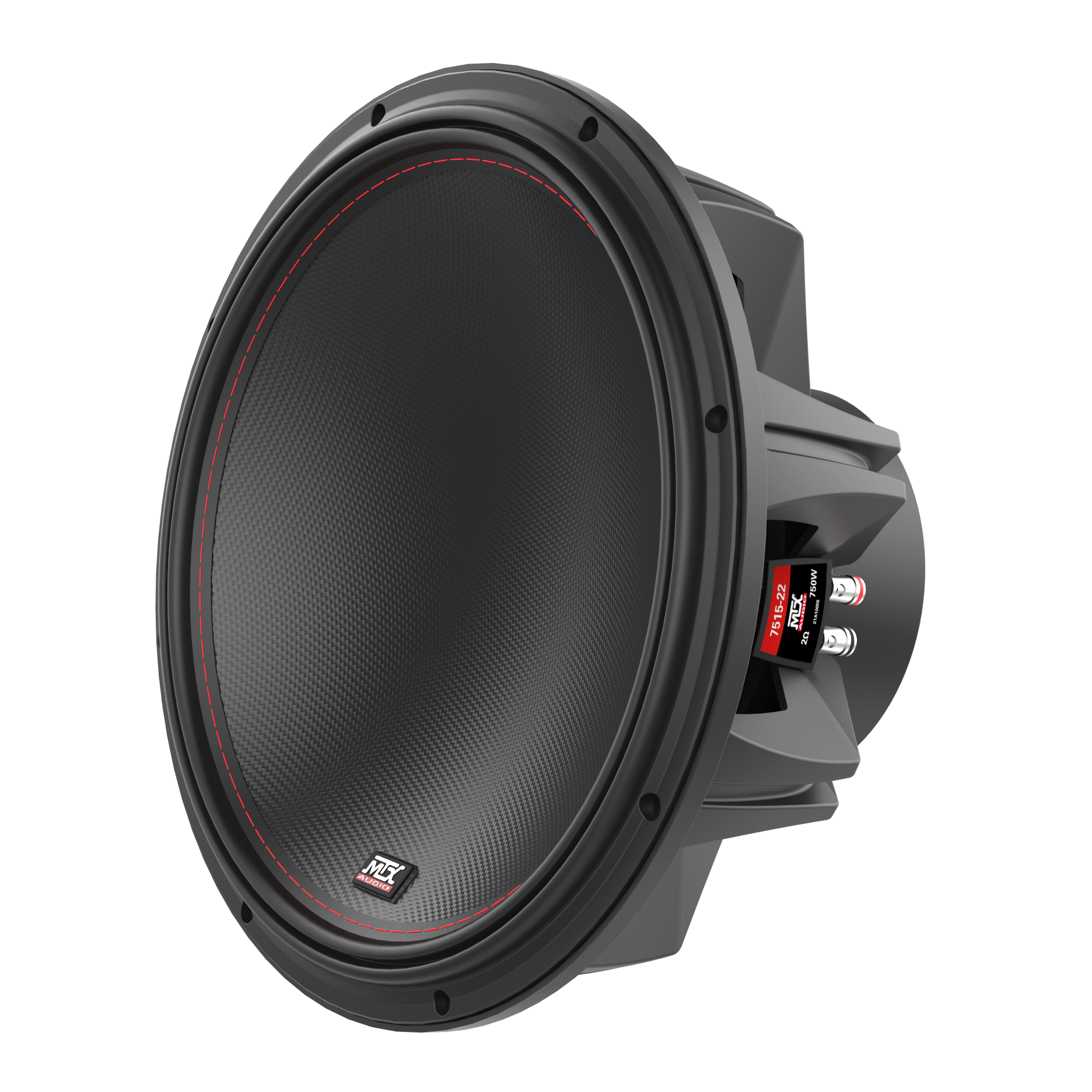
Throughout the performance audio industry there are going to be an abundance of variations of subwoofers. With as many competitors and brands as there are currently in the market, many options are going to be available to consumers. Not all subwoofers are created equal — and knowing what size you need, and why, will save you time and money when building your system.
Throughout MTX Audio's history, we have become well recognized as a leader in subwoofer technology. Our engineering team has pushed the envelope to create some of the most innovative subwoofer technology in the audio industry. One of the most significant advancements is the Inverted Apex Surround — a design that uses the surround material around the outer edge of the cone, connecting to the basket of the subwoofer and allowing the cone to move up and down from its resting position in proportion to the voice coil travel.
The surrounding design of a subwoofer plays a significant role in performance and sound clarity because it controls the linear travel of the cone. Working similarly to how an accordion compresses, the Inverted Apex Surround is built to fold in at the edge when de-energized, then unfold to extend up and down as the music starts and the amplifier's output is applied. This type of innovation is how MTX creates subwoofers of various sizes that pack more output without compromising quality.
Does Subwoofer Size Determine Bass Output?
Size is a significant factor in bass output. A useful comparison is engine displacement in a car or truck — a larger engine moves more air and produces more power. Subwoofers work on the same principle. When a subwoofer is designed, a key measurement is how much air it can move through the cone, voice coil, and enclosure. The more air it moves, the more low-end frequency it can produce, and the more bass your system puts out.
For example, an 8-inch subwoofer will not produce the same low frequencies as a 10-inch or 12-inch sub at the same power level. The larger the cone surface area, the more air it displaces per cycle. That's volume displacement — cone area multiplied by Xmax — and it's the most direct measure of a subwoofer's output potential.
So yes, size matters. Larger subwoofers generally produce more output at the same power level. But size alone isn't the whole picture. A properly powered, correctly enclosed smaller sub will outperform a larger one that is underpowered or in the wrong enclosure. The right size for your system is the one that fits your space, matches your amplifier, and serves your listening goals.
Subwoofer Size at a Glance
Choosing the Right Size for You
Each subwoofer size delivers different performance and output. The right choice depends on your vehicle, available space, amplifier, and what you're trying to accomplish with your sound system.
For the person cruising down their favorite stretch of highway who wants clean, balanced bass with good clarity, a 10" or 12" sub in a sealed enclosure is usually the right call. For the audio enthusiast who wants maximum output — the kind that turns heads at a car show — a 12" or 15" in a ported enclosure with a properly matched high-power amp is where to start.
Whatever your goal, compare every MTX subwoofer series to find the right match for your system and budget.