What Is Clipping?
Clipping is distortion in the signal from the amplifier to the speaker caused when the audio signal is driven beyond the amplifier's maximum output capability. The voltage swing the amplifier can produce is limited in both directions, and when the signal exceeds those limits, the peaks of the waveform are literally cut off — or "clipped." The result is a distorted signal that sounds bad and can damage your equipment.
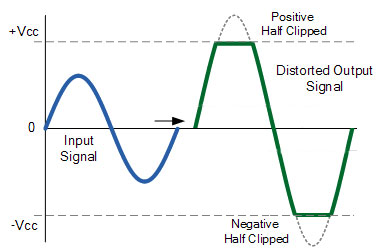
Electric guitar players sometimes overdrive amplifiers intentionally for effect. In a car audio system, clipping just sounds bad and does damage.
What Causes Clipping?
Caused by insufficient peak power. Dynamic sounds like a cymbal crash create sudden voltage spikes well above the average signal level. If the amplifier cannot produce enough peak voltage fast enough, the spike is clipped. Higher quality amplifiers respond faster to these transients.
Caused by inadequate RMS power for the volume level being used, or by the amplifier overheating during extended play. An underpowered amp running near its limits for hours will clip continuously. Inadequate cooling makes this worse.
The gain setting is the most common cause of clipping that is actually within your control. A gain set too high over-amplifies the signal and causes the amplifier to clip even at moderate volumes. This is the most common and most avoidable form.
Why Clipping Damages Speakers
A clipped signal pushes more energy through the speaker than a clean signal at the same apparent volume. The flat tops of the clipped waveform generate sustained heat in the voice coil rather than the brief, dissipated heat of a clean transient. Extended clipping burns voice coils. This is why a speaker damaged by clipping from an underpowered amp is often misdiagnosed as overpowering.
How to Prevent Clipping
The most important step is setting amplifier gain correctly. Gain is not a volume control. It sets the input sensitivity of the amplifier to match the output level of your head unit. A gain set too high causes clipping. Set it too low and you lose output potential. Set it correctly and the amplifier stays clean at its maximum output.
Beyond gain setting, make sure your amplifier has enough RMS power for your speakers at your listening volume. If you are experiencing clipping with a properly set gain at moderate volumes, the amplifier may be underpowered for the system. Either reduce the volume or replace the amp with one that has more headroom.
Choosing components that are properly matched — amp power to speaker power handling, at the correct impedance — is the foundation of a system that plays cleanly at high volumes without distortion or damage.