Do Big Car Stereos Need Extra Batteries? | MTX Audio

Do Big Stereos
Need Extra Batteries?

Customers often ask whether they need to add an extra battery when installing a large car audio system with multiple amps, speakers, and subwoofers. The answer depends on how the system will be used — and in many cases, an alternator upgrade is the more important consideration.

Understanding the Problem

Your vehicle leaves the factory with a battery whose primary job is to start the engine. The alternator keeps the battery charged and supplies power to the entire electrical system while the engine is running.

Large audio systems use high-output or multiple amplifiers that draw significant current from that electrical system. There are two scenarios where this becomes a problem:

  1. You want to run the stereo for extended periods with the engine off.
  2. Your system's current draw exceeds the alternator's output capacity even when the engine is running.

The solution is different for each scenario. Calculate your system's current draw first — then you'll know which one applies.
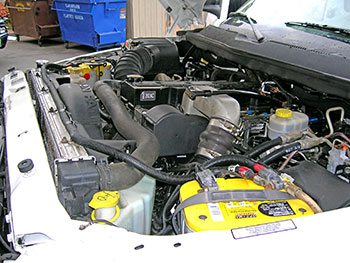
MTX Jackhammer Dodge Ram install showing dual battery setup
The MTX Jackhammer Dodge Ram install — two batteries and three alternators for a 4,000W RMS system

Scenario 1: Music With the Engine Off

If your only concern is listening with the engine off, you can estimate run time using this formula:

Battery run time formula
10 × (Battery Ah) ÷ (Load Watts) = Run Time (hours)
Example: 500W amplifier, Optima YellowTop® 75Ah battery
10 × 75 ÷ 500 = 1.5 hours

If you need more run time than this formula produces, add another battery. Each additional battery of the same rating adds proportionally to the total run time.
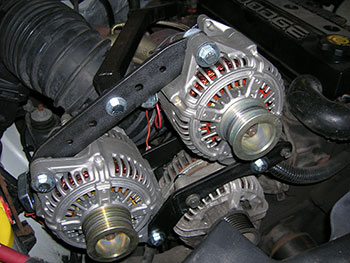
Multiple alternators installed for large MTX car audio system
Multiple alternators for the MTX Jackhammer install — necessary when system current draw exceeds a single alternator's output

Scenario 2: System Outruns the Alternator

If the audio system's current draw exceeds the alternator's output while the engine is running, the dashboard and headlights may dim when loud bass notes hit. The power shortage can also cause amplifiers to overheat and shut down.

Calculate your system's current draw using Ohm's Law: I (amps) = P (watts) / E (volts).

Current draw example
I = P ÷ E
Example: 500W monoblock + 500W 4-channel = 1,000W total
I = 1,000 ÷ 14.4 = 69.4 amps

Most stock alternators output between 60 and 120 amps total — for the entire vehicle. A 1,000W system alone can consume most or all of that.
Adding a battery is not always the right fix If the system's current draw exceeds the alternator's output, the alternator is still the bottleneck — even with additional batteries. The alternator limits how fast those batteries can be recharged and how much current reaches the system. An alternator upgrade is usually the correct long-term solution.
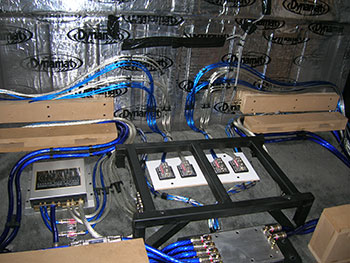
Power distribution for large car audio amplifiers
Power distribution block for a large multi-amplifier install

Alternator Upgrades

Although upgrading the alternator costs more than adding a battery, the electrical system will perform significantly better in the long run. Some very high-power installations use multiple alternators to achieve adequate amperage. The MTX Jackhammer Dodge Ram build shown in this article uses two batteries and three alternators to support a 4,000W RMS system.

When upgrading the alternator, also evaluate the cable between the alternator and battery. Car manufacturers size this cable to limit current as protection for the alternator. Upgrading the ground wire is also necessary when installing a higher-output alternator. If you keep the factory alternator, leave the factory wiring in place.
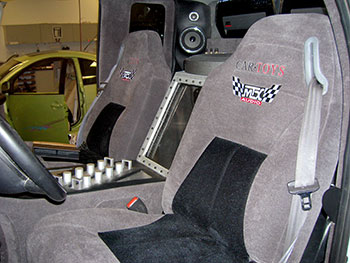
MTX Jackhammer 4000W RMS subwoofer installed in Dodge Ram
The MTX Jackhammer — 4,000W RMS, requiring a purpose-built electrical system to match
Not sure what your system needs? Use the formulas above to calculate your current draw, then compare it against your alternator's rated output. If you need help working through the numbers for your specific setup, contact the MTX support team.

Frequently Asked Questions

Do I need an extra battery for a big car audio system?
It depends on usage. If you want to run the stereo with the engine off for extended periods, an extra battery helps. If your system's current draw exceeds the alternator's output while running, an alternator upgrade is usually the better solution — batteries alone won't fix an underpowered alternator.
How do I calculate how long my battery will last with the engine off?
Use the formula: 10 × (Battery Capacity in Amp Hours) ÷ (Load in Watts) = Run Time in Hours. For example, a 75Ah battery with a 500W amplifier gives 10 × 75 ÷ 500 = 1.5 hours of run time.
Will adding a battery fix my dimming lights?
It may help short-term but is not always the best solution. If your system's current draw exceeds the alternator's output, the alternator is still the bottleneck even with extra batteries. An alternator upgrade is the more effective fix for systems that regularly exceed the stock electrical system's capacity.
How much current does my amplifier draw?
Use Ohm's Law: I (amps) = P (watts) ÷ E (volts). At 14.4V, a 1,000W system draws approximately 69 amps. A 2,000W system can draw up to 140 amps or more. Most stock alternators output between 60 and 120 amps total for the entire vehicle — so large audio systems can easily exceed stock capacity.

Next Steps

Shop amplifiers ›
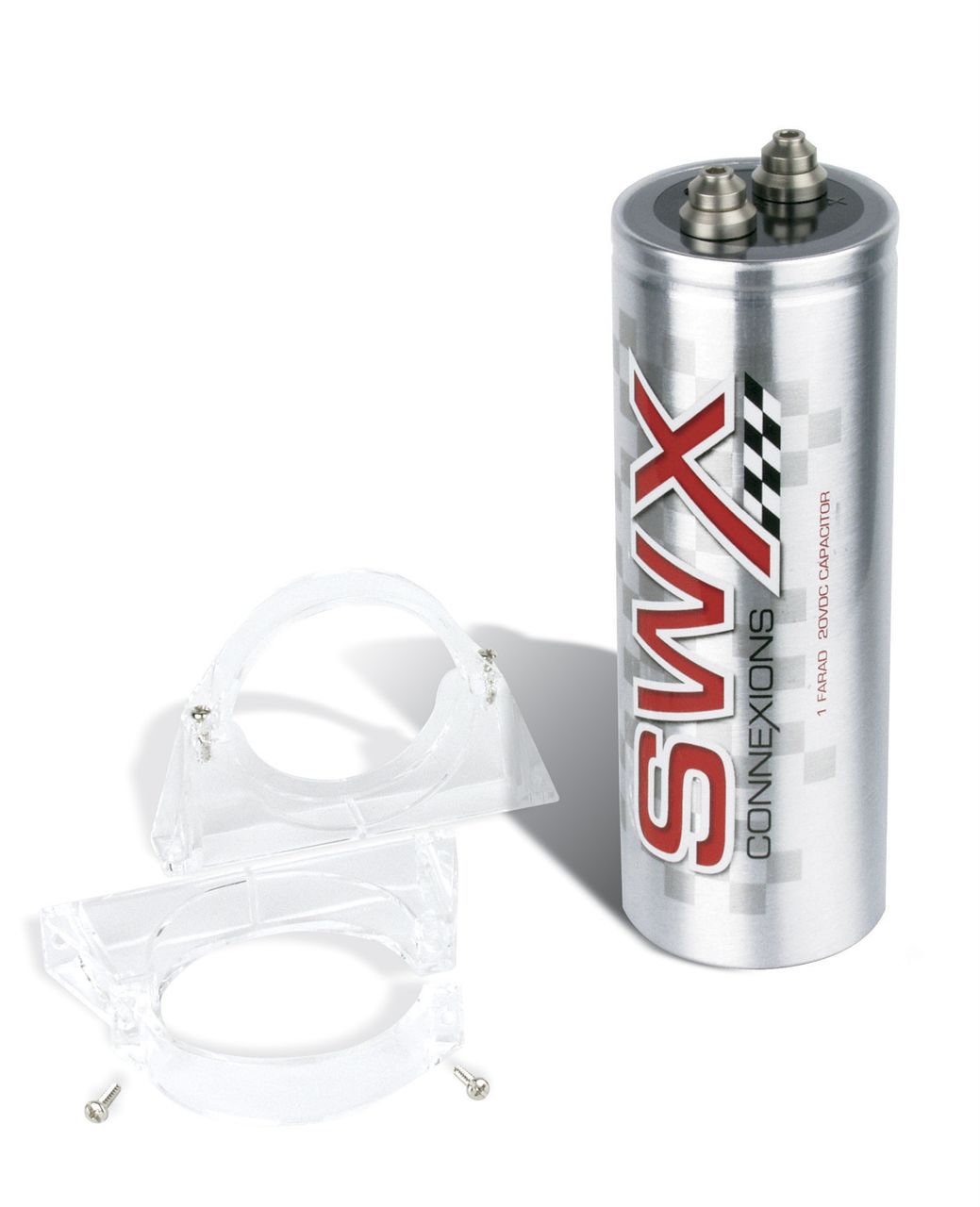
CAP1 Capacitor
CAP1 StreetWires Capacitor
1 Farad · Voltage stabilization
Shop now
Wiring Kits
ThunderLink Wiring Kits
Correct gauge for your system
Shop now
RTX Series
RTX Series Amplifiers
SPL performance · Class D
Shop series
Thunder Series
Thunder Series Amplifiers
SQ performance · Clean power
Shop series