Have you ever heard someone talk about their 4,000-watt amplifier? Or seen someone ask which amp is best for two 12" subwoofers without specifying impedance? These seem like simple questions but there is a lot more to them. Here are two facts you need to understand before buying a car audio amplifier.
01 Don't Mistake Peak Power for RMS Power
Some manufacturers have confused the public by advertising exaggerated power output specs to make customers believe they are buying 4,000 watts for $49.99. In the industry, ratings like this are called "W.L.S." ratings, short for "When Lightning Strikes," because getting struck by lightning is about the only way some amps will ever see that kind of power.
Peak power ratings are a marketing tactic. The amplifier may briefly produce its peak rating for a second under ideal conditions, but it will never sustain that output for any meaningful period of time.
Maximum output for a fraction of a second under perfect conditions. Not a useful number for matching components.
Continuous average power the amp actually produces. This is what you will hear. This is the number that matters.
Reputable manufacturers use RMS (Root Mean Square) ratings. RMS power is the continuous output the amplifier produces assuming it is receiving adequate voltage. This is the power behind the volume, the dynamic response, the cymbal crash, the bass hit. Use RMS when comparing amplifiers and matching them to subwoofers.
If an amplifier has a peak power rating of 2,000 watts and an RMS rating of 750 watts, it should be called a 750-watt amplifier.
02 Don't Match an Amp at the Wrong Impedance
Just because your amplifier does 1,000 watts RMS does not mean it is the right amp for two subwoofers with 500W RMS each. You need to consider the impedance your subwoofers are wired to, and match the amplifier's power output at that same impedance.
Amplifier power output changes with load impedance. An amp rated at 1,000W at 1Ω will deliver significantly less power at higher impedances. Wiring subwoofers to the wrong impedance is one of the most common causes of blown amplifiers and burned voice coils.
| Impedance | Power Output | Notes |
|---|---|---|
| 1Ω | 1,500W RMS | Full rated output |
| 2Ω | 750W RMS | Half rated output |
| 4Ω | 500W RMS | About ⅓ rated output. Subs underpowered. |
If your amp is rated for 1,500W at 1Ω but your subwoofers are wired to 4Ω, you are getting roughly 400W, less than a third of the rated output. That is not a matching problem with the amp. It is a wiring problem. Wire the subs to 1Ω and you get the full 1,500W.
A Worked Example
Two 75 Series 12" Dual 2Ω Subwoofers + TH1500.1
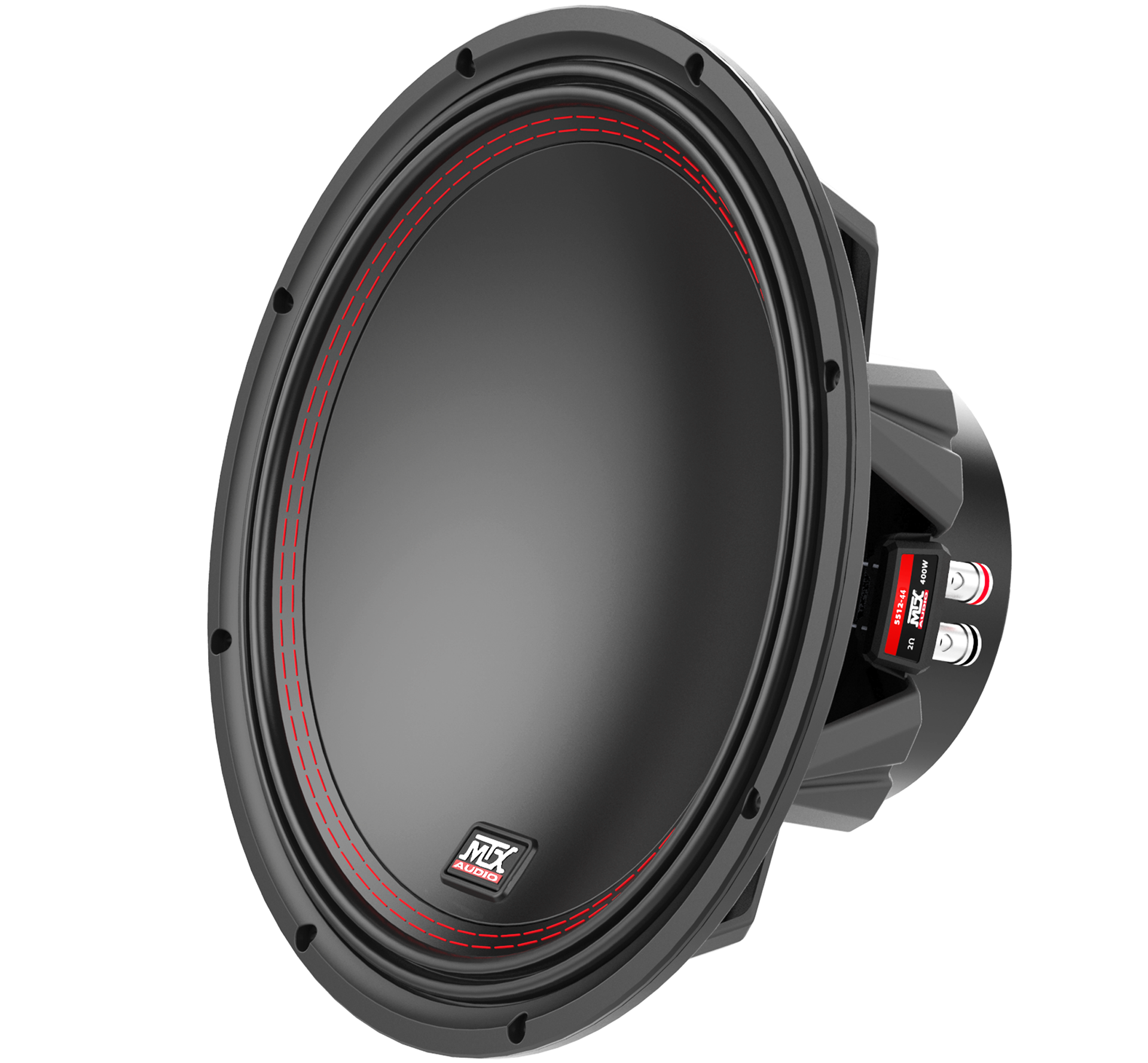
The MTX 75 Series 7512-22 is a 12" dual 2Ω subwoofer rated at 750W RMS. Two of them means you need 1,500W total. Wire them in parallel to a final impedance of 1Ω.
The MTX TH1500.1 produces exactly 1,500W RMS at 1Ω, a perfect match. Wire those same subs to 4Ω instead, and the amp only delivers 500W. That leaves each sub receiving just 250W of its 750W RMS rating. The wiring makes all the difference.
Use the MTX Subwoofer Wiring Diagrams tool to find the right wiring configuration for your sub and impedance combination before choosing an amplifier.
When shopping for a car audio system, determine the impedance circuit first. Then find an amplifier that delivers the right RMS power at that impedance. Get both right and you will have a system that performs the way you paid for it to perform, with no blown amps or burned coils.