Replacing your stock speakers with aftermarket, high performance car audio speakers is the #1 way to get better sound from a car stereo. Many people believe that the easiest way to get better sound is to change out the head unit. While this will generally improve the features available versus the stock stereo, the sound quality doesn't usually improve. An aftermarket head unit has roughly the same power output capability that a stock radio does. Additionally, chances are the factory speakers are tuned to the stock radio — so changing out just the radio may result in worse sounding music.
The easiest way to get better sound from a car stereo is to replace the speakers, and if possible, connect them to an amplifier. Car manufacturers don't invest much into the stock audio system. Generally, the speakers have paper cones, small magnets, and are of a lower quality. Car manufacturers want to sell cars, not stereos — so they give just enough to have an audio system.
Aftermarket speakers are designed with much higher quality materials and with a focus on sound quality. Performing an internet search for car speakers can be a daunting task as there are literally thousands of speakers in the market today of various sizes, constructed using a variety of materials, and with a multitude of engineering and marketing features. For the purpose of this article, the type of speaker will be the focus as that choice can make a significant impact on the sound quality of the system.
Woofer and tweeter in one basket. Easiest direct replacement. Works with factory head unit.
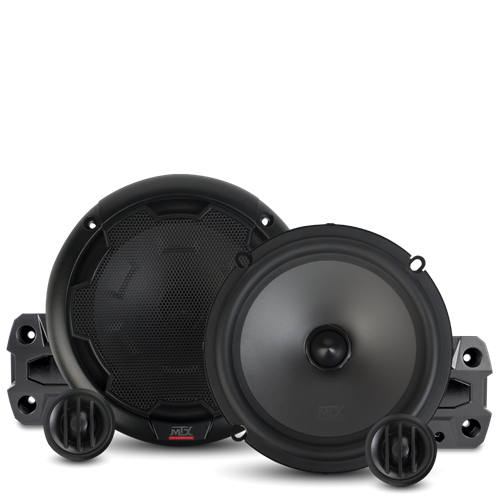
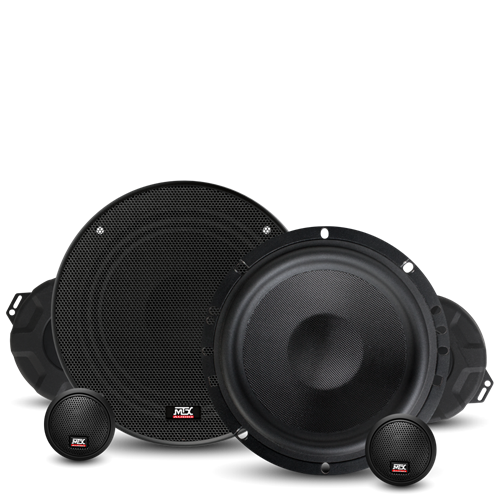
Separate woofer, tweeter, and external crossover. Better staging and sound quality. Works with factory head unit.
Individual drivers for each frequency range. Maximum performance. Requires amplifier.
Coaxial Speakers
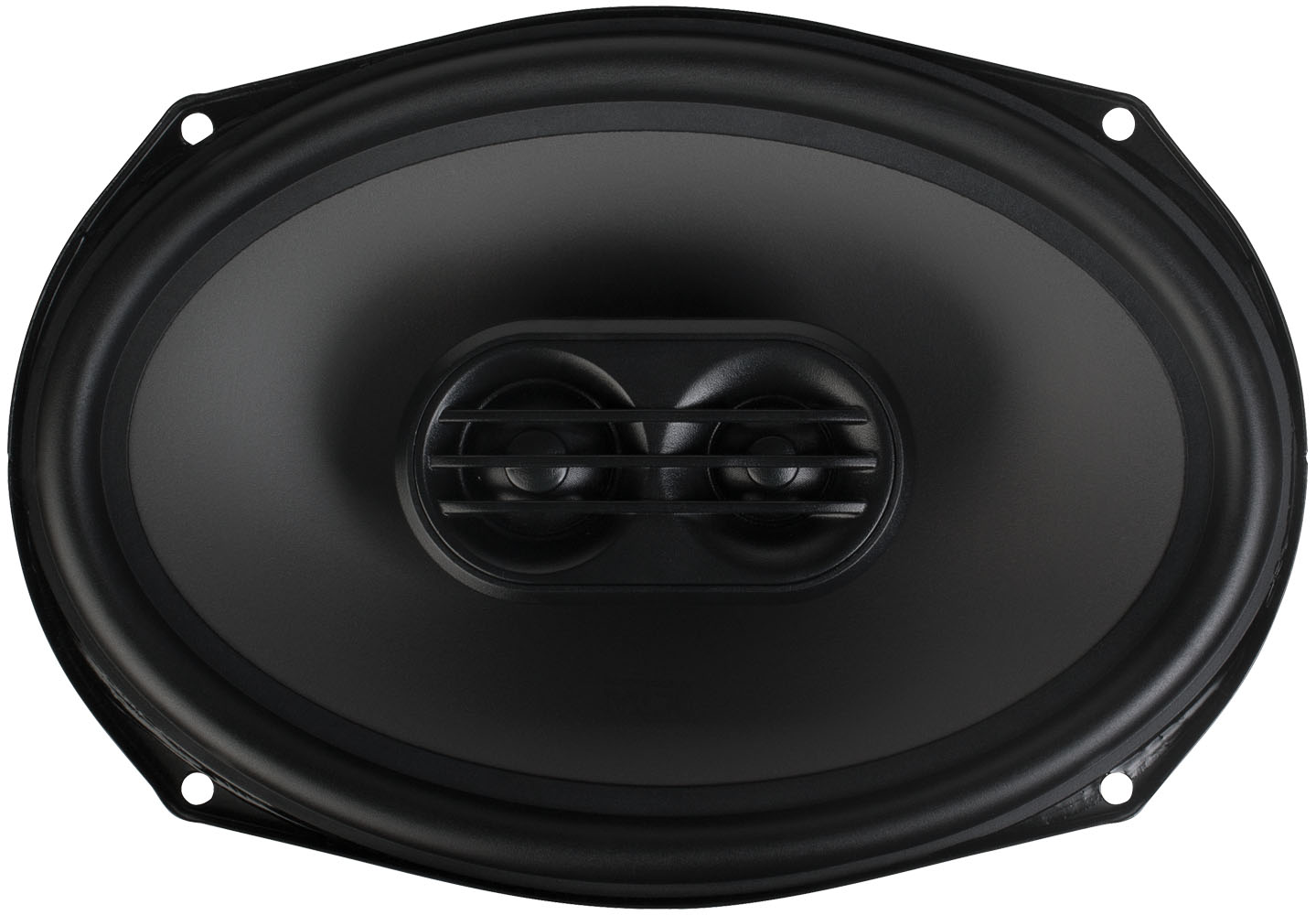
A coaxial speaker is the most common type of car speaker and is usually the least expensive to purchase. A coaxial speaker has two drivers — a woofer and a tweeter — mounted in the same basket. The tweeter can be mounted to a pole piece in the center of the woofer or on a bridge that spans two sides of the woofer. Coaxial speakers are designed to play a wide frequency range, generally between 50Hz and 20kHz. The woofer plays the lowest frequencies, 50Hz–5kHz for example, and the tweeter plays the higher frequencies, 5kHz–20kHz. An internal crossover, often an inline capacitor, directs the proper frequencies to each driver. The speaker has a single terminal on the basket for connecting to the head unit or an external amplifier.
Coaxial speakers are available in the most size options — anywhere from 3.5" to 7"×10" — and are therefore the easiest to find as direct replacements for factory speakers that don't require any cutting or modifications when installing.
Component Speakers
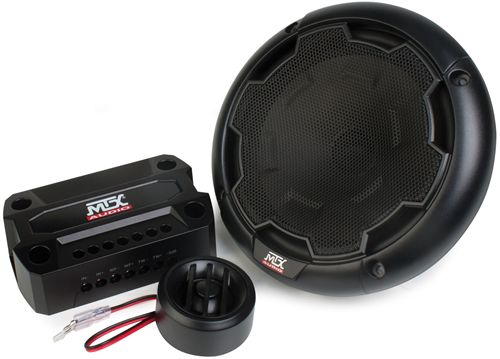
Some vehicles come with speakers that are separate — a woofer that mounts in the door panel and a tweeter that mounts higher up the door or in the A-pillar. These are called component or separate speakers. The main difference between a component speaker and a coaxial, besides the fact that the two drivers are separate, is the inclusion of an external crossover. This external crossover has positions for both drivers to connect independently, then connects to the head unit or amplifier.
This gives the user greater control over how the speaker will sound. Since the drivers are separated with the tweeter closer to the listener's ear, the sound staging is greatly improved over a coaxial speaker that has both drivers in the same location in the door panel. Component speakers often use higher-end materials like Kevlar or glass fiber on the woofers and Teteron® or titanium on the tweeters, making them a more expensive option than a coaxial. Before buying a replacement it is important to understand the type of stock speaker being replaced to ensure the right style is purchased.
Mid-Bass Drivers and Bullet Tweeters
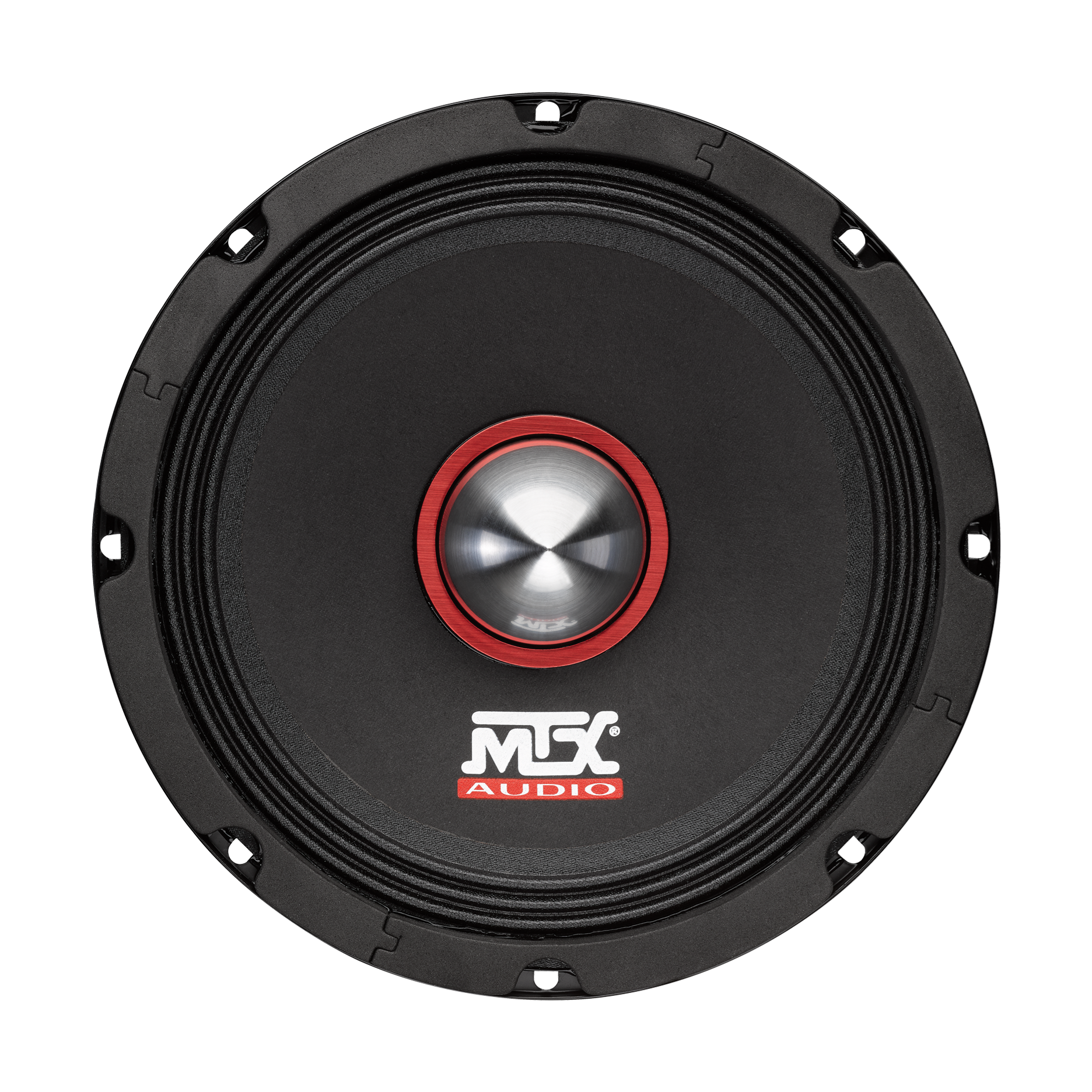
For a more custom looking and sounding system, mid-bass drivers and bullet tweeters can really make a statement. While coaxial and component speakers can be connected to a head unit without an amplifier, mid-bass drivers and bullet tweeters require amplification to function properly and maximize their performance. These speakers are designed to handle significantly more power than their coaxial and component cousins.
Mid-bass drivers are available in multiple sizes, usually 6.5" to 12", and play exactly what they say — mid-bass frequencies (60Hz–5kHz for example).
Bullet tweeters follow the same model. They are bigger than the tweeters found on coaxial and component speakers (up to 4") and handle much more power, which allows them to produce extreme volume levels especially when properly amplified. The best part of using these types of speakers is that each speaker can have its own channel of amplification, allowing the user to really dial in the crossover of the amplifier to make each speaker perform to its maximum potential. Using these speakers requires a much greater monetary investment since more speakers are required to reproduce all frequencies and an external amplifier is required.
Other Things to Consider
Adding an amplifier to a system with upgraded speakers will increase volume output and clarity significantly. Aftermarket speakers are designed for use with amplifiers to get the best possible sound quality.
Finally, when comparing speakers pay attention to specifications. Use RMS power handling — not peak or max — for a true accurate rating of how the speaker will perform. Frequency response is also important: bass frequencies are in the range of 20Hz–200Hz. A speaker that plays closer to 20Hz will deliver more bass, which matters especially if a subwoofer is not going to be added to the system.